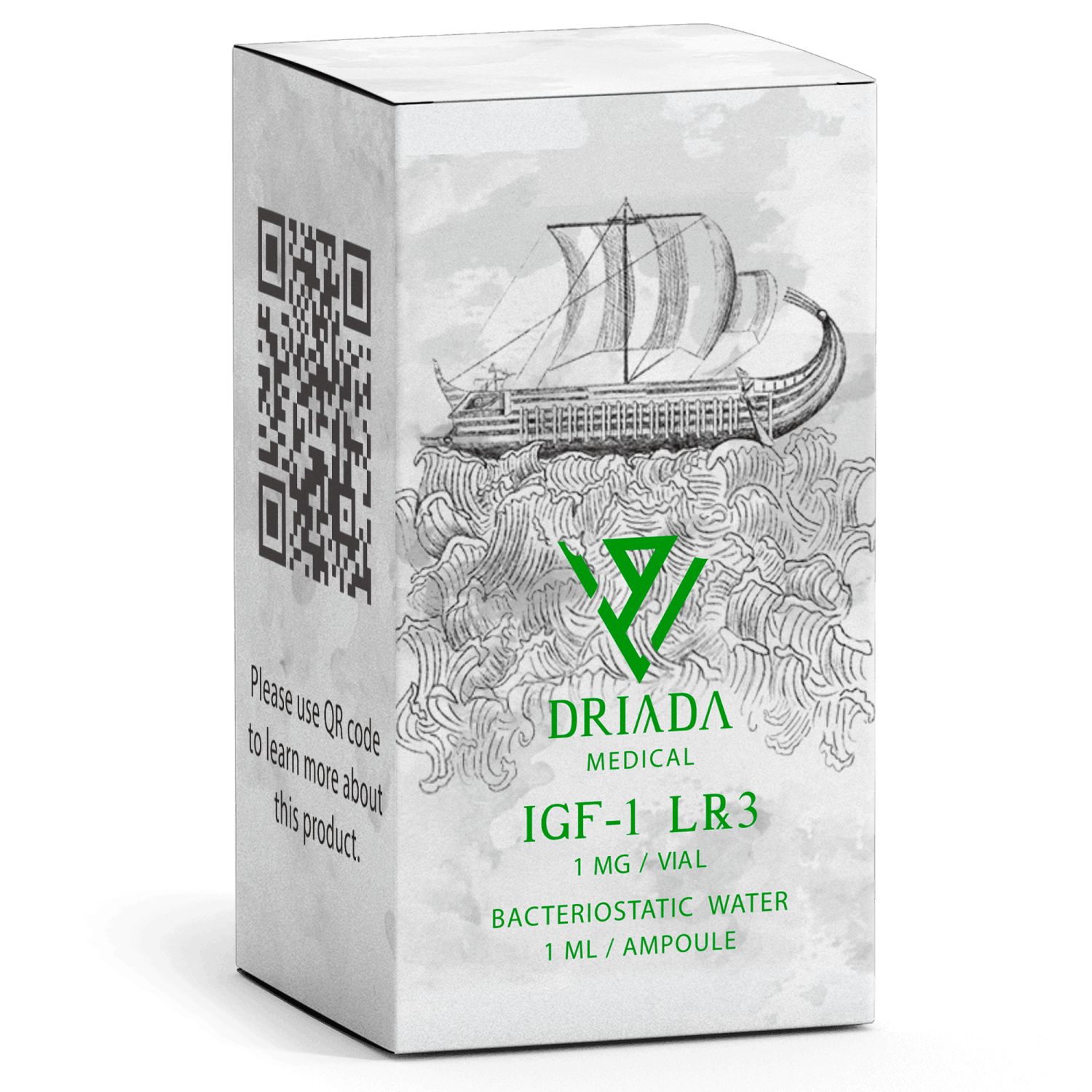
WHAT IS IGF-1?
Insulin-like Growth Factor 1 (IGF-1) is a vital protein that plays an integral role in human growth and development. This recombinant human protein, which belongs to the insulin-like growth factor family, consists of 70 amino acids and functions similarly to insulin. It is involved in the regulation of various bodily processes, including cell growth, development, and differentiation, through endocrine, autocrine, and paracrine pathways.
One of the intriguing aspects of IGF-1 is its connection to aging. Research suggests that mutations in the IGF-1 gene can increase lifespan in laboratory animals, highlighting its potential impact on longevity. In children, IGF-1 is essential for stimulating cell growth and differentiation, while in adults, it continues to exert anabolic effects, promoting tissue growth and maintenance.
IGF-1 operates within a complex network of growth factors, receptors, and binding proteins that mediate cell proliferation, differentiation, and apoptosis. These growth factors are low-molecular-weight proteins present in nearly all tissues, where they regulate cell division, growth, and migration. In the skin, for instance, they are crucial for the migration and development of epithelial cells and stimulate cell division.
Often referred to as somatomedin C, IGF-1 serves as a key mediator of the growth hormone (HGH) effects. It is primarily produced by liver hepatocytes in response to growth hormone stimulation. The liver’s production of IGF-1 is influenced by various hormones, including sex steroids, thyroid hormones, glucocorticoids, and insulin. Insulin, androgens, and estrogens tend to enhance IGF-1 secretion, whereas glucocorticoids inhibit it. This interplay explains the synergy between these hormones in growth and development processes and the inhibitory impact of glucocorticoids on growth and puberty.
Throughout life, IGF-1 levels fluctuate, peaking during adolescence and dipping during childhood and old age. Despite these variations, IGF-1 remains a crucial anabolic hormone. It is secreted by various tissues, with the liver being the primary source, releasing IGF-1 into the bloodstream to act as an endocrine hormone. Other tissues, including cartilage cells, also secrete IGF-1, where it functions locally as a paracrine hormone.
In recent years, IGF-1 has garnered attention in the sports world as a doping agent, featuring in numerous high-profile doping cases. Its ability to enhance growth and performance makes it a substance of interest and concern in athletic communities.

Reviews
There are no reviews yet.